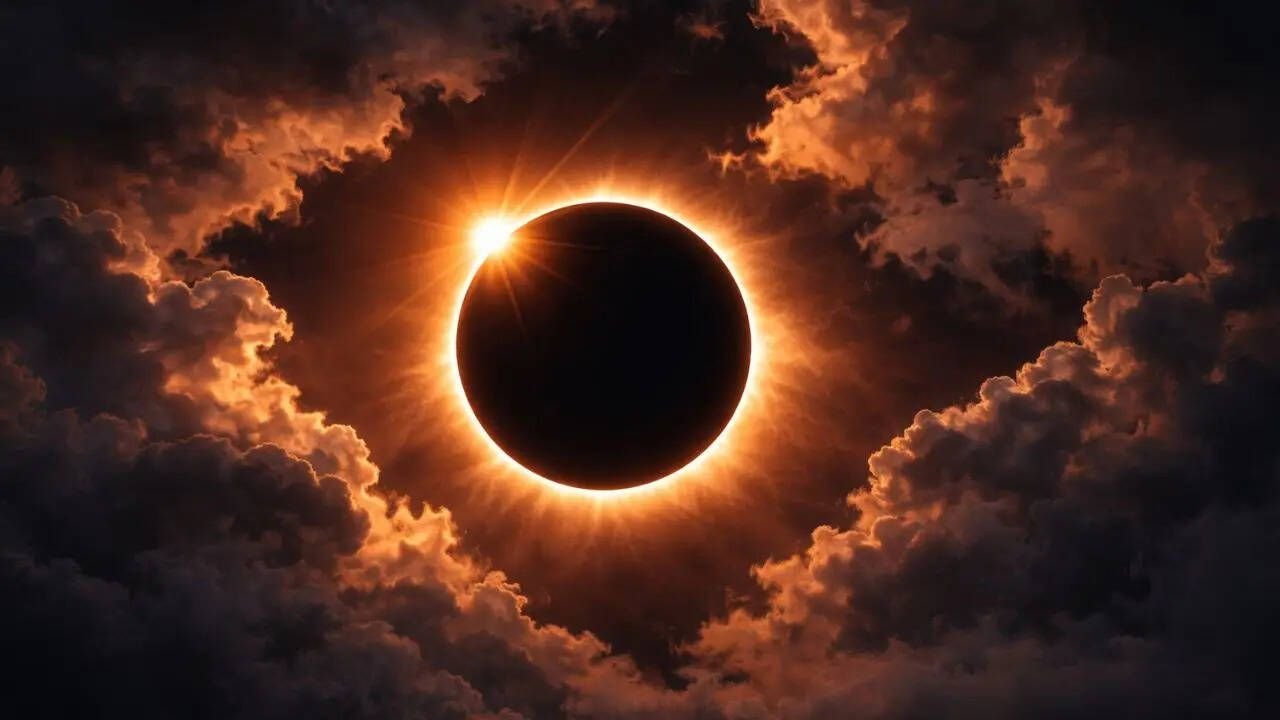
Today, February 16, 2026, the global astronomical community is preparing for a remarkable celestial event set to occur tomorrow. The February 2026 Solar Eclipse will manifest as an annular eclipse, a phenomenon where the moon positioned at its farthest point from Earth appears smaller than the solar disk. This alignment prevents the moon from completely obscuring the sun, resulting in a radiant golden ring known as a ring of fire. While this event is one of the most visually striking types of eclipses, its unique geometry means that the path of totality is often narrow and remote. Tomorrow, that path will be centered over the most isolated continent on our planet, Antarctica, creating a logistical challenge for those hoping to see the full effect in person.
Table of Contents
The Mechanics of Annular Alignment and the Antumbral Shadow
An annular eclipse is defined by the antumbral shadow, which is the region where the moon is completely contained within the disc of the sun from the perspective of the observer. During the peak of this event, approximately 96 percent of the solar surface will be covered. Unlike a total solar eclipse where the corona becomes visible in a darkened sky, an annular eclipse maintains enough solar intensity that the sky remains relatively bright. This specific event is part of Saros series 121, a sequence of eclipses that has been repeating every 18 years for centuries. Because the moon is near apogee its furthest point in orbit it cannot cover the sun entirely, leaving the characteristic ring that defines this astronomical occurrence.
Geographical Constraints of the Path of Annularity
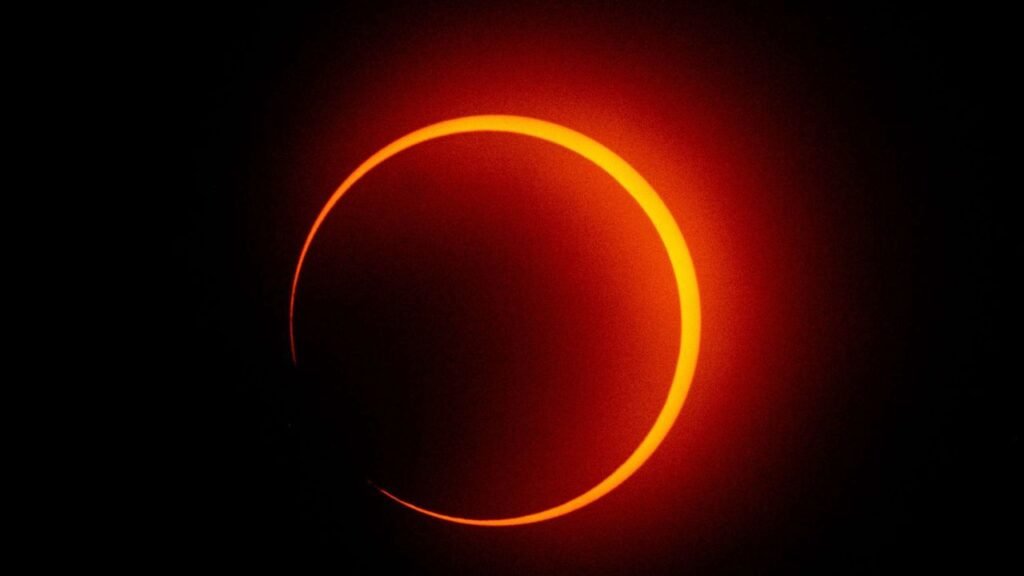
The primary challenge for observers of the February 2026 event is its geographic footprint. The path of annularity, where the ring of fire is perfectly symmetrical, begins in the southern Indian Ocean before sweeping across the icy plains of Western Antarctica and concluding in the South Atlantic. This trajectory means that the vast majority of the world’s population will remain outside the central shadow. Scientific research stations, such as Mirny and Concordia, are among the few terrestrial locations where the full annular phase will be visible. For the rest of the world, the experience will range from a partial crescent sun to no visibility at all, as the northern hemisphere remains tilted away from the eclipse path during this window.
Regional Visibility and Coverage Comparison
While the full ring of fire is reserved for the Antarctic wilderness, millions of people in the southern hemisphere will witness a partial eclipse. The degree of solar obscuration depends heavily on how far north an observer is located from the Antarctic circle. In southern Africa and the tip of South America, the moon will appear to take a “bite” out of the sun, though the percentage of coverage will be significantly lower than in the deep south. The following table illustrates the expected maximum coverage for various regions during the event.
| Region | Maximum Solar Coverage | Visibility Type |
| Western Antarctica | 96% | Annular (Ring of Fire) |
| Southern Ocean | 90% to 95% | Annular / Deep Partial |
| South Africa (Cape Town) | 20% to 30% | Partial |
| Southern Chile and Argentina | 15% to 25% | Partial |
| Madagascar and Mozambique | 10% to 15% | Partial |
| Northern Hemisphere | 0% | Not Visible |
Essential Safety Protocols for Direct Observation
Observing any solar event requires strict adherence to safety standards to prevent permanent retinal damage known as solar retinopathy. Because the sun is never fully blocked during an annular eclipse, the remaining ring of light is powerful enough to cause injury within seconds of unprotected exposure. Standard sunglasses, even those with high UV protection, are entirely insufficient for looking at the sun. Observers must use ISO 12312-2 certified solar eclipse glasses or indirect viewing methods to participate safely.
- Use only certified solar filters for telescopes, binoculars, and camera lenses.
- Inspect eclipse glasses for any scratches or pinholes before use.
- Utilize pinhole projectors to view the shadow of the eclipse on the ground if glasses are unavailable.
- Supervise children closely to ensure they do not remove protective eyewear while looking at the sun.
- Do not look at the sun through an unfiltered optical device even while wearing eclipse glasses.
Utilizing Eclipse Data for Science and Navigation
Beyond the visual spectacle, the February 2026 Solar Eclipse serves a functional purpose for modern science. Researchers in Antarctica use these windows of diminished solar radiation to study the ionosphere and its effects on satellite communications. For the average person, understanding these cycles helps in planning future travel to more accessible eclipses, such as the total solar eclipse coming later in August 2026. If you are in a partial visibility zone tomorrow, you can observe the “crescent shadows” cast through the leaves of trees, which act as natural pinhole projectors. This is a practical way to witness the geometry of the solar system without expensive equipment.